Discover the Art of Capturing Moments with Dan Sproul Photography. Immerse yourself in a world of visual storytelling through the lens of an experienced photographer. From breathtaking landscapes to intimate portraits, our blog unveils the magic behind every click.
Exploring Oregon by Circle: Coast, Cascades & Gorge
Oregon has a way of surprising you at every turn — from misty coastal cliffs to mirror-flat alpine lakes and thunderous waterfalls. This circular Oregon road trip takes you from the Pacific in Cannon Beach, down the coast, through the Cascade heart, and back home through the Columbia Gorge.
Prologue: We flew into Seattle because it was cheaper than direct Oregon flights, grabbed our bags, and hopped into a Jeep we rented via Turo (getting off the beaten path is easier when you’re in control of the wheels). With a sense of adventure (and a camera in hand), we headed southwest toward the Oregon coast.
Cannon Beach & the Northern Coast
Our first stop: Cannon Beach, where Haystack Rock pierces the horizon and seabirds wheel overhead. The wind off the Pacific carried salt and promise.
Press enter or click to view image in full size
Evening light paints the sky above the iconic Haystack Rock at Cannon Beach. -link to image
We wandered the surf, watched tidepools fill and empty, and felt the ocean’s timeless pull. As the day’s light softened, we made our way to Ecola State Park, where trails wind through spruce and hemlock toward viewing points that frame the coast in dramatic arcs.
By lunchtime, seafood was calling. We stopped in Cannon Beach at Ecola Seafoods Restaurant & Market — a rooftop, boat-to-table seafood spot with ocean views. Their fish & chips, smoked salmon, and clam chowder were absolutely worth the detour. Visit Ecola Seafood
Down the Coast: Tillamook, Cape Perpetua & Bandon
Continuing our journey south, we passed Tillamook Creamery, a cheese and dairy institution on the Oregon Coast. We couldn’t resist stopping. The visitor center and sampling (and ice cream) were delicious — a dairy lover’s delight. Visit Tillamook Creamery
A little further on, we paused at Heceta Head Lighthouse, perched above crashing waves, then wound through Cape Perpetua Overlook, where coastal forest meets surf in misty harmony.
We arrived in Lincoln City for a quiet evening by the sea, then pressed on to Bandon. At Face Rock Viewpoint, as the sun dipped, the sand lit up, sea stacks cast long shadows, and driftwood lay gentle in shallow surf.
We lingered by the surf, letting the salty air and sea spray re-set our spirits before heading inland.
Into the Cascades: Sisters & Sparks Lake
Leaving the coast behind, we headed toward the Cascade Range and the quaint town of Sisters, Oregon. The alpine air felt different — cool, clear, and sharp. En route, we detoured to Sparks Lake, a gem tucked into mountain terrain. As evening light softened, the still water caught every peak in perfect reflection.
From Sisters we drove toward Mount Hood, passing through Government Camp into forested slopes. At Trillium Lake, the views are iconic. As the sun set, Hood’s silhouette darkened above, mirrored in glassy waters, while the forest whispered in twilight.
We paused, breathing in alpine quiet, letting the world slow just for a moment.
Finale: Corbett & the Columbia River Gorge
Our loop brought us toward Corbett, Oregon, nestled at the western edge of the Columbia River Gorge. This stretch of highway is a cascade of waterfalls and river vistas. We visited Latourell Falls, where water plunges through lush greenery in vivid streams.
Starting in Seattle saved on airfare, letting us stretch more time on the ground in Oregon.
Renting the Jeep through Turo gave us flexibility to explore off-beat roads and hidden pullouts.
Dining local mattered — from Ecola Seafood’s fresh line-caught fish in Cannon Beach to the cheesey pleasures at Tillamook Creamery — both stops are culinary highlights.
Give yourself extra time for spontaneous detours. Oregon is full of “just around the bend” magic: secret viewpoints, little waterfalls, and stretches of road that make your heart skip a beat.
Check road and weather conditions, especially as you head into the Cascades and gorge roads — snow or rain can shift plans in a moment.
Whether you’re chasing coastal sunsets or alpine reflections, this circular Oregon route offers a taste of everything: the ocean, the mountains, and waterways that carve through deep forest. It’s a journey of contrasts, of quiet moments and grand views — and one you’ll want to take again.
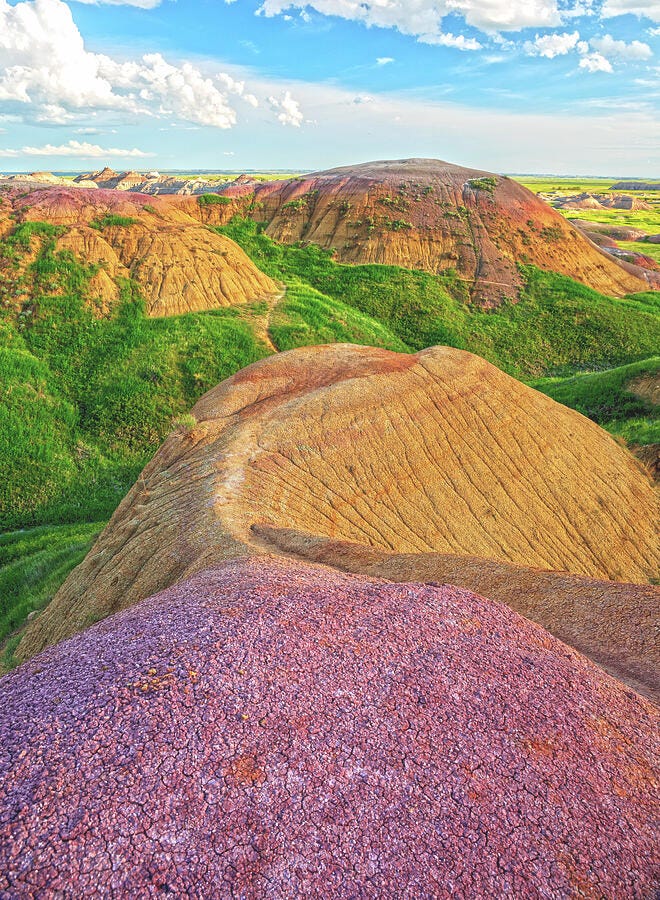
Spring at Badlands National Park in South Dakota is a season of transformation. The winds can still be brisk and nights chilly, but the reward is watching the park slowly wake from winter. Fresh green grasses begin to spread across the rugged terrain, wildflowers emerge in bursts of color, and seasonal wildlife returns with the chorus of western meadowlarks. Best of all, spring brings quieter trails and open access throughout the park, making it one of the best times to explore without the heavy crowds of summer.
Popular activities this time of year include hiking, wildlife watching, and stargazing. With its wide-open skies and almost no light pollution, the Badlands becomes a haven for night photographers and astronomy enthusiasts. On a cold night, I waited beneath the stars to capture the Milky Way arching over the formations — the chill was worth every moment.
Learn more about Badlands National Park at the NPS site.
Wildlife Encounters
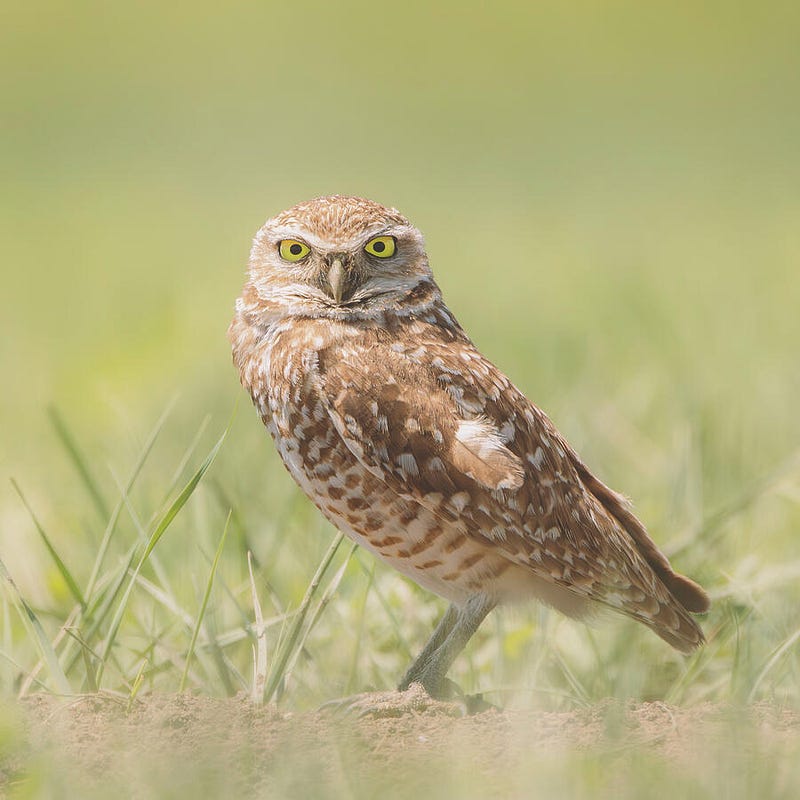
Wildlife thrives in the spring, from prairie dogs to bison and bighorn sheep. One of my most memorable moments was watching a bighorn sheep family along the ridges — an intimate connection where they seemed as curious about me as I was about them. Another unforgettable experience was photographing a burrowing owl. Patience was key; I spent hours quietly waiting for the right moment to capture its alert gaze amidst the grasslands.
You can view more of my Badlands wildlife photography here:
The Badlands are renowned for their layered rock formations and ever-changing light. Spring mornings bring dramatic skies and golden horizons. Capturing a Badlands sunrise was one of the highlights of my visit, the jagged peaks glowing against a vivid sky. As the season deepens, wildflowers add splashes of color to the already breathtaking landscape.
One of the true treasures of the Badlands is its unspoiled night sky. Far removed from city lights, the park is designated a Dark Sky destination, offering unparalleled opportunities for stargazing. On a brisk spring night, I set up my camera under the stars and captured the Milky Way stretching across the formations — an unforgettable reminder of how vast and wild this place remains.
Avoid the crowds: Spring means fewer visitors and open access throughout the park.
Wildlife activity: From meadowlarks to prairie dogs, many species are active during the season.
North Unit Visitor Center: The park’s main visitor center is a must-stop, offering history, recommended hikes, and a Fossil Preparation Lab where you can watch paleontologists at work.
Bring layers: Temperatures vary widely — mornings can be cold, afternoons warm, and winds frequent.
Perfect for photographers: Vivid colors, clear skies, and unique wildlife make spring one of the best times for photography.
Spring in Badlands National Park is about patience and discovery — watching wildlife return, hearing the chorus of meadowlarks, and seeing the land painted with fresh life and color. Whether it’s waiting quietly for a burrowing owl, feeling the chill of a night sky filled with stars, or sharing a moment with a bighorn sheep family, the park offers memories that last a lifetime.
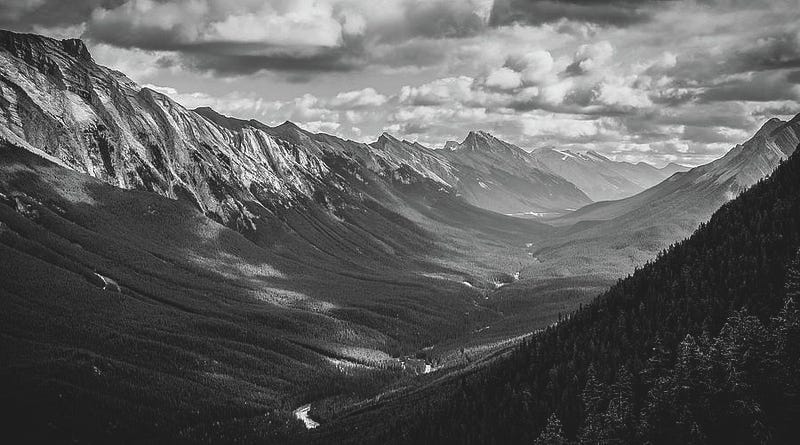
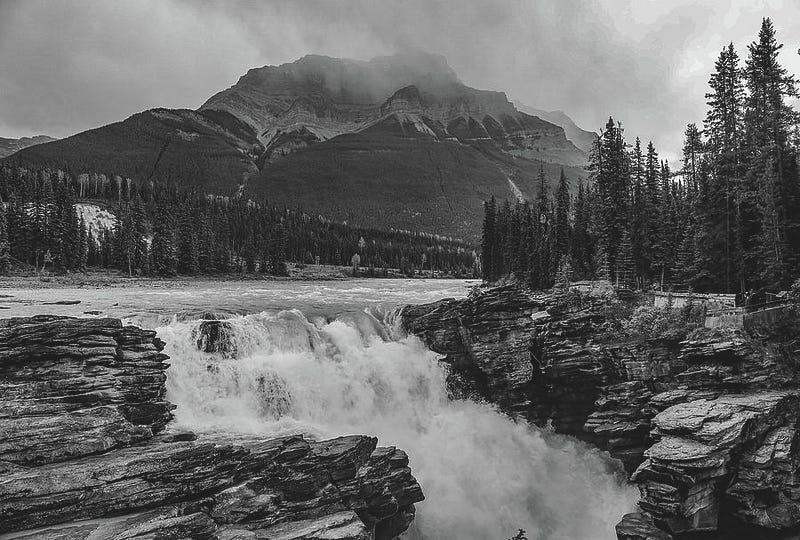
When you step into the Canadian Rockies, you’re met with towering peaks, shimmering lakes, and an overwhelming sense of scale. While the colors of these landscapes are unforgettable, black and white photography brings out something deeper — the texture, the drama, the mood.
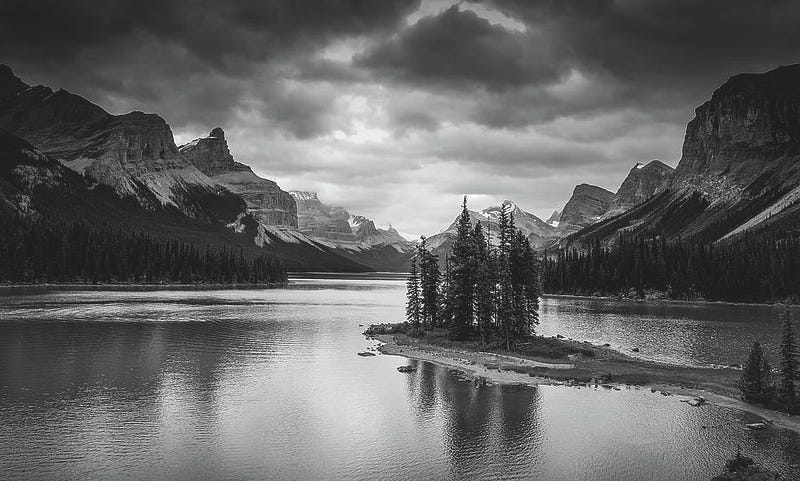
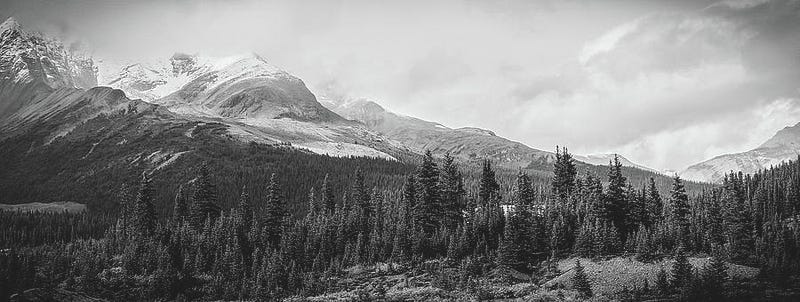
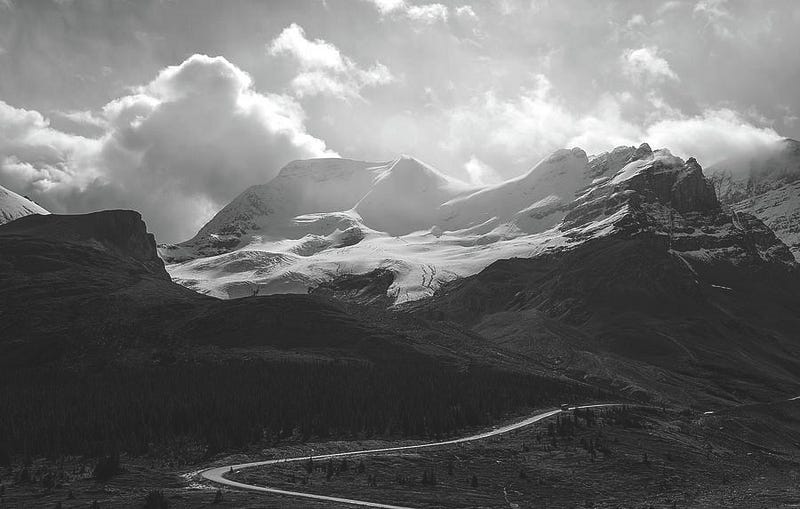
Below, I share some of my favorite monochrome captures from my travels, each one showing how timeless the Rockies feel when reduced to light and shadow.
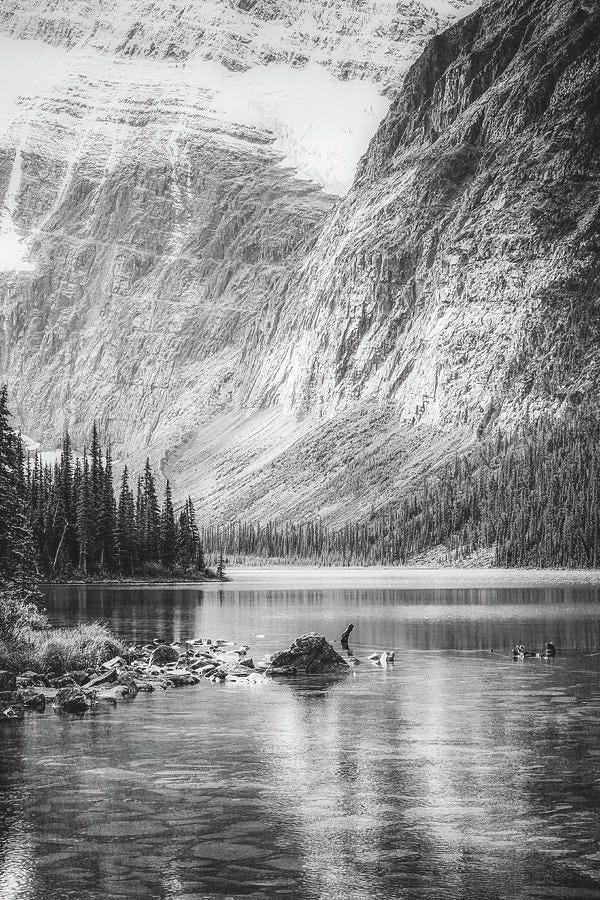
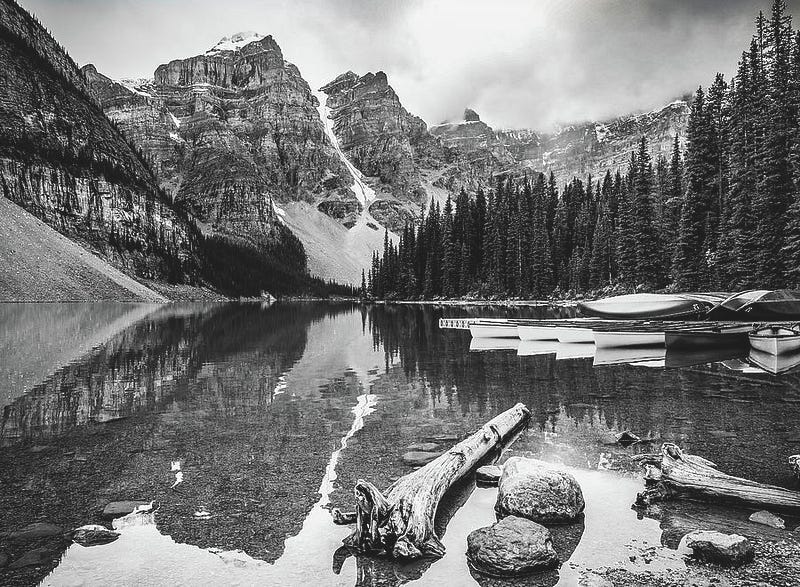
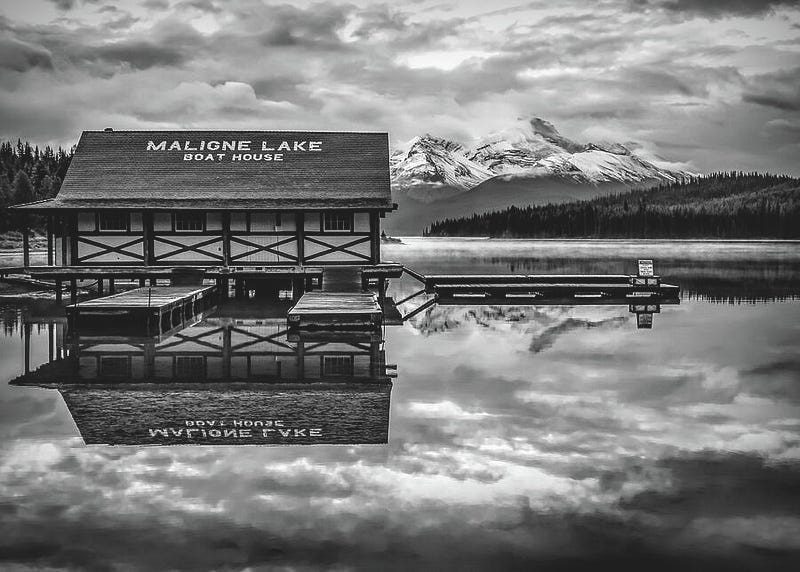
Still waters turn into a perfect mirror, creating a scene of balance and calm. In B&W, the silence of the moment becomes even stronger.
Why Black & White Works So Well Here
It removes distractions and highlights the structure of the land.
Shadows and light gain more weight, emphasizing depth.
The Rockies feel both timeless and more dramatic in monochrome.
Whether it’s waterfalls, alpine lakes, or vast ridgelines, the Canadian Rockies are a playground for photographers. Stripped of color, they reveal their essence — raw, textured, and profoundly moving.
✨ If you’d like to explore or bring these prints into your own space, you can find them all on my gallery → Dan Sproul Fine Art